
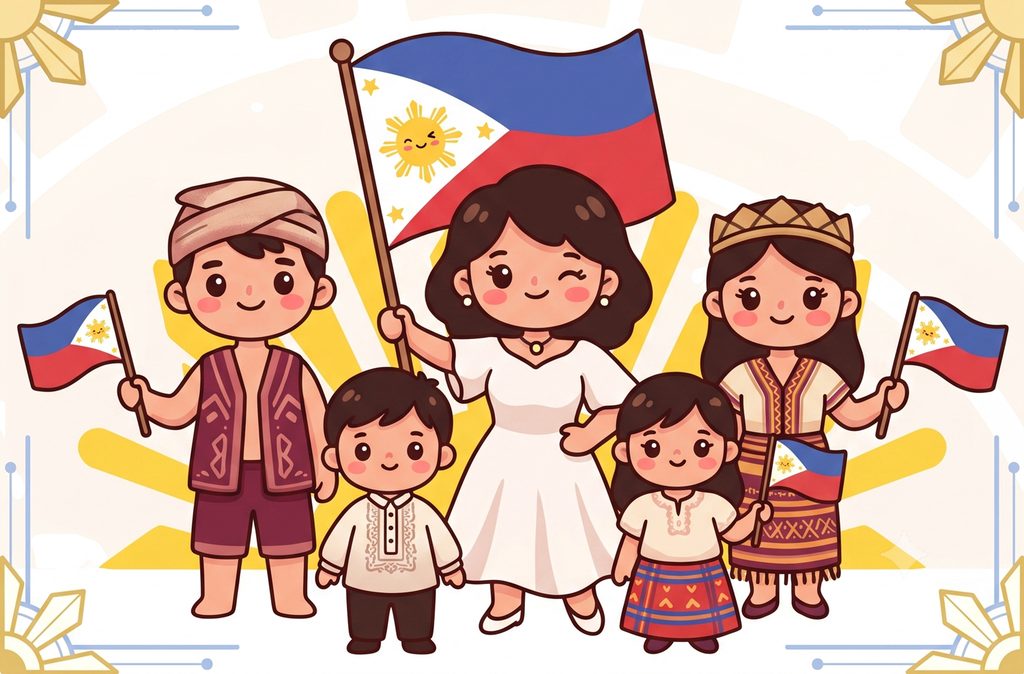
Creative Ways to Celebrate Buwan ng Wika 2026
August is just around the corner, and the familiar, vibrant hum of preparation is in the air. Soon, school corridors and offices will be alive with the colors of our traditional weaves, the rustle of Barong Tagalogs and Filipinianas, and the proud cadence of our native languages.
This year, the celebration takes a fascinatingly modern turn. The Komisyon sa Wikang Filipino (KWF) has announced the official theme for Buwan ng Wikang Pambansa 2026:
“Wikang Filipino at AI: Kasangkapan sa Pananaliksik at Tulay sa Yamang ng Impormasyon.”
By virtue of Proclamation No. 1041, s. 1997, the entire month of August is dedicated to honoring our national language. But in 2026, we aren’t just looking back at our heritage—we are looking forward. The theme challenges us to explore how Wikang Filipino intersects with Artificial Intelligence, serving as a vital tool for cutting-edge research and a bridge to the world’s wealth of information.
If you are wondering how to bring this beautiful blend of tradition and technology to life, here are creative and meaningful ways to celebrate Buwan ng Wika this year!
1. Step into the Digital Frontier: Tech-Infused Research & Language Exploration
With this year’s focus on AI and information, let’s explore how our language lives in the digital sphere.
- Etymology & AI Prompts: You’d be amazed to learn how many common Filipino words have roots in foreign languages like Spanish, Sanskrit, Malay, and Chinese. Turn this into a tech exercise: use AI tools to trace the lineage of unique Filipino loanwords (silya, guro, luksa), mapping out how they evolved into our modern vernacular.
- The Wikipedia Edit-a-thon: Celebrate Filipino as a tool for research by organizing a mini “Edit-a-thon.” Gather a group to translate valuable global research papers, historical accounts, or scientific concepts into high-quality Filipino articles on Wikipedia, expanding the digital wealth of information available to our youth.
2. Immerse in the Arts: From Text to Textures
There is no better way to commemorate our language than by consuming the art created through it.
- Curate a Filipino Reading & Viewing List: Dive into the works of brilliant Filipino authors, poets, and playwrights. Whether it is classic literature, contemporary fiction, or graphic novels, reading in our native tongue sharpens our appreciation for its nuance. Pair this with a Filipino movie night featuring cinematic masterpieces that capture the diverse realities of our culture.
- Modernizing Narrative Classics: Take inspiration from timeless Filipino stories or classic films and challenge yourself (or your students) to reimagine them for today’s generation. How would a classic mid-century drama look in the age of smartphones and social media?
3. Dynamic In-School and Corporate Activities
Bring the celebration to life with interactive campus or workplace events that merge traditional camaraderie with fresh twists.
- The Ultimate Bugtungan Challenge: Move beyond standard quizzes! Hold a high-energy riddles contest where groups compete to decode traditional bugtong. To tie in the 2026 theme, you can even have students prompt an AI to generate original riddles in Filipino, testing whether human wit can outsmart the machine’s logic.
- Sabayang Pagbikas (Choral Recitation): A timeless staple of Buwan ng Wika. Have different levels compete in delivering powerful, rhythmic recitations of contemporary poetry or speeches. Encourage them to be creative with their choreography, blocking, and vocal harmonies to bring the theme of language and technological advancement to life.
- Cultural Dance Showcases: Celebrate the rhythm of our islands. Showcase the grace and energy of traditional Filipino dances like the Tinikling, Maglalatik, or Sayaw sa Bangko. Understanding the stories behind these dances is just as vital as mastering the steps—they are visual languages of our ancestors’ daily lives, triumphs, and celebrations.
The Coexistence of Heritage and Innovation
Buwan ng Wika 2026 reminds us that language is a living, breathing entity. It is not static, trapped in historical textbooks. It belongs in our research laboratories, in our prompt engineering, and in the digital codes shaping the future.
As we don our national costumes this August, let us celebrate the Wika that roots us to our past, and the very same Wika that bridges us to the infinite possibilities of tomorrow. Maligayang Buwan ng Wikang Pambansa!